
Why Does My Lower Back Hurt When I Sit at My Desk All Day?
If you've got a desk job and your lower back aches by the afternoon, you're not alone — this is probably the number one reason people walk into my clinic. It's unfortunately common, but it's also one of the most fixable things I treat.
It Starts Long Before Your First Desk Job
The pattern actually begins around age five, the moment you start school. Sit down, stay still, don't move — for six or seven hours a day, five days a week. That's the last thing a human body wants or is designed to do.
Your body evolved over millions of years to be strong and mobile. Then we put it in a static seated position for the bulk of our waking hours, and it's no surprise things start to hurt. When you're not moving, blood flow slows down, and your muscles — especially your glutes and hamstrings — essentially go to sleep. Your lower back ends up taking an absolute hiding as a result.
And it's not just the desk. It's the commute sitting in the car, it's sitting down to watch TV in the evening, it's sitting down to eat every meal. We sit far more than our bodies were ever built for. The body adapts its strength around whatever position it spends the most time in — and for most people, that position is sitting at a desk. So the moment you try to go to the gym, play sport, or just move differently, the body reacts. It's no longer in the "safe" position it's been conditioned for, so it gives you aches, tightness, and pain.
Why the Lower Back Specifically Takes the Hit
You don't have "lazy" glutes. They're working — if they weren't, you wouldn't be able to stand or walk at all. What actually happens is they stop being optimised. When they're asked to just sit there all day, every day, they essentially forget how to fire properly when you need them to. I call it glute amnesia.
When you get up to walk, run, or lift something, those glutes are meant to be the primary movers. But if they've gone quiet from underuse, your body has to find another way to get the job done — and it recruits your lower back to compensate. That's the real root of most desk-related back pain: it's not actually a lower back problem, it's a glutes and hip flexor problem. Your lower back is simply being overworked doing a job it was never designed to handle on its own.
The body is efficiently lazy. It will always default to the easiest, quickest way to complete a movement, even if that way isn't the most efficient or sustainable one long-term.
The One Change That Makes the Biggest Difference
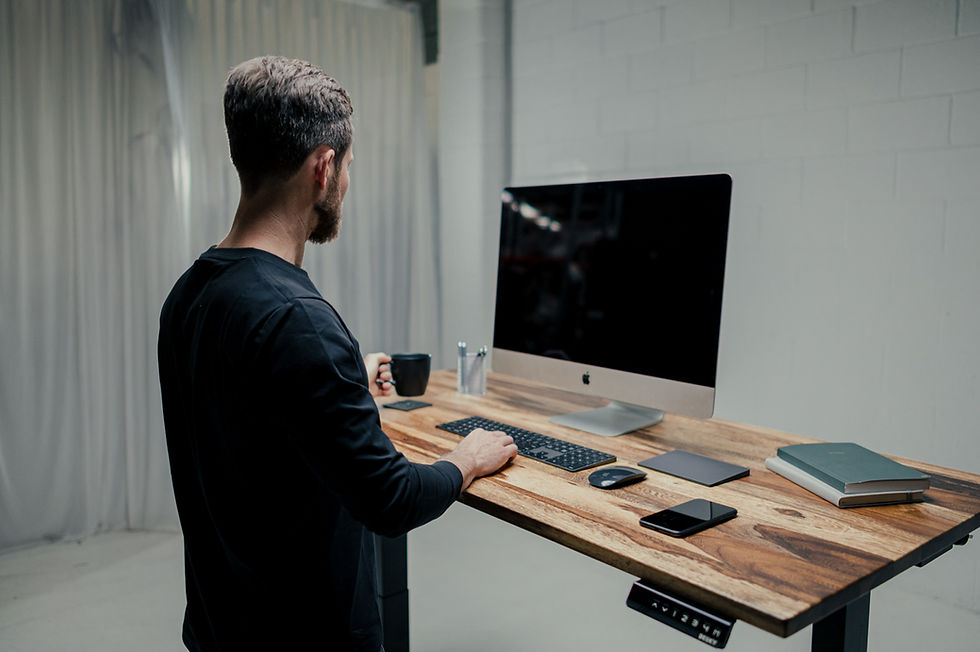
If you've got a desk job, the single thing I recommend above everything else is a sit-stand desk. Not to stand all day — most people don't have the strength or conditioning for that straight away — but to have the option to stand more and sit less.
Standing more creates blood flow, activates muscles that have gone quiet, and simply gets you moving throughout the day rather than staying static for eight or nine hours straight. You could be doing the best strength training in the world, getting the best treatment available, and still not make real progress if you're consistently sitting for most of your waking hours, week after week, year after year. You have to change the environment you're putting your body in, not just add extra exercise on top of the same environment.
How to Actually Build Up to Standing More
Most clients find standing desks genuinely challenging at first, and that's completely normal — your body isn't conditioned for it yet. The key is building it up incrementally rather than jumping straight in.
Start with around 15 minutes of standing per hour
Once that feels manageable and you're comfortable, add another 5 minutes every couple of weeks
Keep progressing gradually — this can take anywhere from six weeks to six months to build up to standing for the majority of your day
It's the same principle as strength training. You wouldn't walk into the gym and squat 100 kilos on day one. This is no different.
I can honestly say that close to every client I've seen with lower back pain who's made this change has improved, even in cases where they haven't been consistent with their exercises. Just moving more throughout the day changes things — not only their pain levels, but their performance in the gym, their ability to pick up their kids, and their ability to move through daily life without pain running the show.
The Ergonomic Chair Myth
Ergonomic chairs, keyboards, mice, and monitor height adjustments won't help nearly as much as most people expect. They might put you in a slightly better position, but you're still static for too long regardless of how good the chair is.
The chair itself is the real problem. No ergonomic setup is going to resolve lower back pain if you're still sitting in it for hours on end, because the chair is doing the structural work your muscles should be doing. Your muscles stay passive because they can rely on the chair to hold you up. Ergonomic assessments focused on mouse placement, keyboard position, and screen height simply don't address the core issue. The fix is standing more and sitting less — that's genuinely it.
You Don't Need to "Strengthen Your Core"
Core strengthening gets thrown around as the go-to fix for back pain, but it's largely a buzzword in this context. Your core is working constantly, all day, every day — it's not sitting idle.
The real question is whether you're using your body the way it was designed. Are you bringing your glutes and hip flexors into play properly to stabilise and support your movement? You don't need to add a dedicated core program or start Pilates to fix desk-related back pain. It's about moving more, generally and consistently. Your body was never designed to sit at a desk all day. Movement is your number one medicine.
A Real Case Study
I've had numerous clients with a straightforward pattern: chronic lower back pain from years at a desk, who made the switch to a sit-stand desk and built it up gradually as described above. In the overwhelming majority of these cases, that single environmental change improved their lower back pain, even without perfect consistency on their exercises. The pain reduced, but so did the flow-on effects — better performance training, easier movement in daily life, and simply being able to get through the day without pain dictating everything.
If Your Job Doesn't Allow a Sit-Stand Desk
Some jobs genuinely don't have that option — truck drivers, call centre roles, and other positions where long periods of sitting are unavoidable. If that's your situation, the work has to happen outside of work hours. Can you sit less in the mornings and evenings? Build movement into the rest of your day wherever you can, and focus on building yourself as strong as possible to better withstand the sitting you can't avoid.
When Desk-Related Back Pain Is a Red Flag
Most desk-related back pain is soft tissue overload and responds well to the approach above. But if you're experiencing shooting pain down your leg, you can't stand upright, or you can't move without significant pain, it's worth looking a bit deeper — this could indicate something like a disc bulge or a nerve being compressed.
Even then, treatment follows a similar path. It usually just means the issue has been left to build for longer than it should have. Pain always starts as a whisper — a request for change. If it keeps getting ignored, that whisper gets louder and louder until it's shouting at you in the form of significant pain. Your body is genuinely smart. It's worth listening to it early.
Does the Cause Actually Matter?
Whether your back pain came from sitting all day, lifting incorrectly, or picking up your kids, the underlying mechanism is usually the same. Certain muscles get overworked and overloaded because the bigger structural muscles — your glutes and psoas — aren't doing their job properly. The body compensates, and it can handle that compensation for a while, but eventually it reaches a limit.
Unless there's been direct trauma to the lower back, such as a car accident or a fall, roughly 90% of lower back pain comes down to this same pattern of soft tissue overload from a movement pattern that isn't working the way it should.
It Can Be Fixed — But It Requires the Work
So many people live with lower back pain for years and just accept it as their new normal. It doesn't have to be. Unless there's been direct trauma, soft tissue overload from overloading and underloading the wrong muscles can genuinely be resolved. The real question is whether you're willing to put in the work — move more, build strength in the right places, and stop simply managing the pain instead of addressing why it's there.
If desk-related back pain has been part of your life for too long, book in for a session and I'll show you exactly what's driving your pain, what isn't working in your movement pattern, and what it'll take to get you strong, moving well, and out of pain for good.


Comments